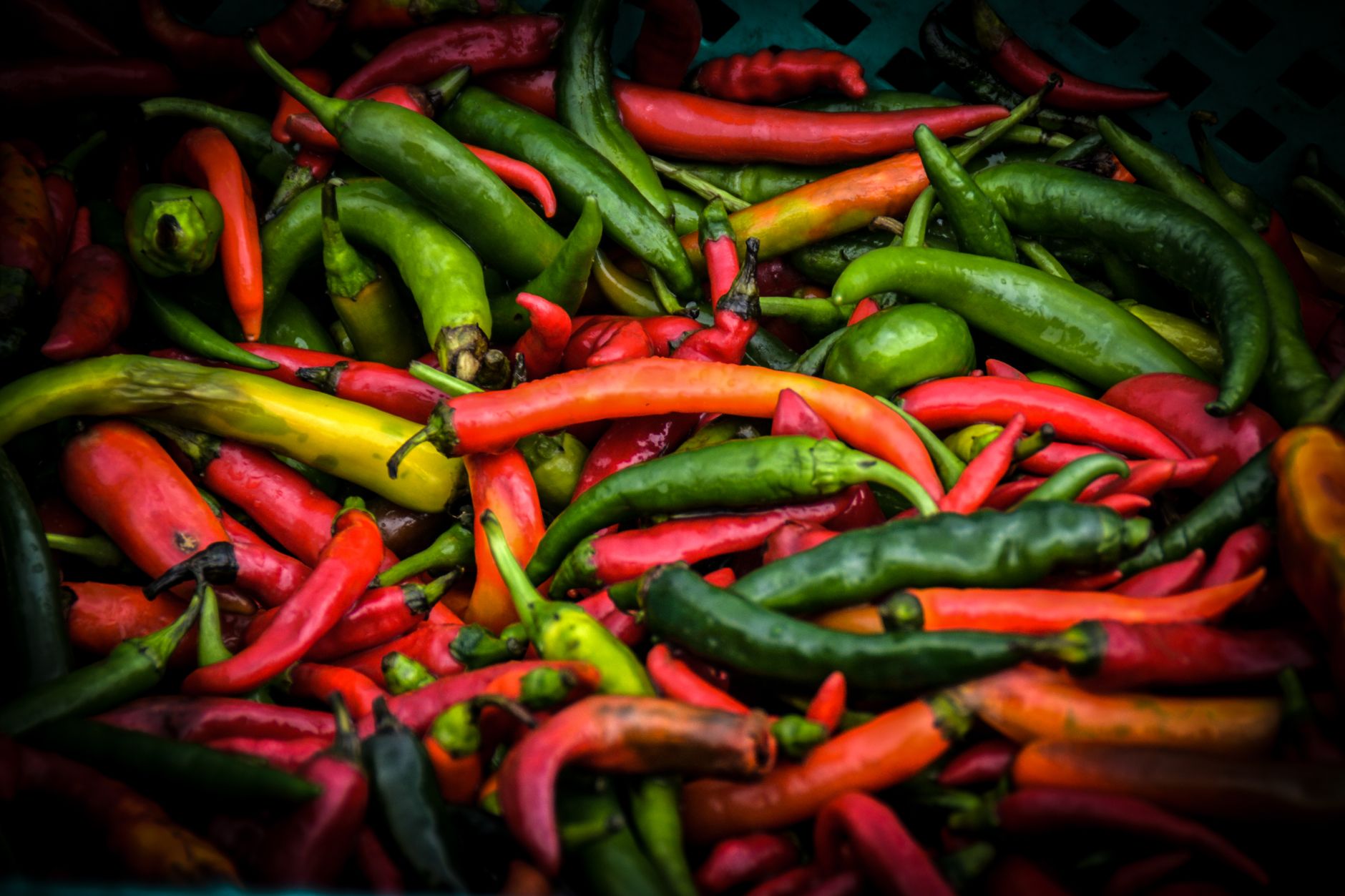
I usually grow Jalapenos in my garden to use for homemade pickles. I usually get a few, but this year the plant took off. Every day I picked at least four to six peppers. I made poppers to snack on. I used some in homemade salsa and I froze others. If you decide to freeze some for yourself, deseed them first.
I found an old article in my mother’s cookbook and decided to share it. Peppers vary in heat because of the capsaicin in them according to New Mexico State University. They ranked the top ten in this order.
- Bell peppers: 0
- Anaheim: mild
- New Mexico Red: naky
- New Mexico Big Jim: 4-6
- Sandia: 5
- Espanola: 6
- Jalapeno: 7
- Cayenne: 8
- Chili Paquin: 9
- Habanero: 10
The Habanero gets its name from its place of origin near Havana.
The Caribbean also produce the Scotch Bonnet which ranks extremely high in heat and often used in island cooking.
Peppers have been eaten in wild form for 10,000 years and cultivated for 2,500 years. Maya, Aztec, and Inca Indians celebrated the chili pepper in religious legend and daily life. Montezuma, the last Aztec emperor, drank a chocolate and chili concoction for breakfast. Peppers grow worldwide, but the most popular are from Central & South America, the Southwest, and the Caribbean.
Chili peppers are members of the nightshade family, similar to potatoes and tomatoes. Capsaicin is used in analgesic creams for muscle aches, and some people use it for cluster headaches too. If you can’t tolerate a pepper’s heat, the best relief is milk. A protein called casein in dairy foods washes away the capsaicin. Water only spreads the heat around.